23 Sep 2024
BLOG: Scottish Climate Week special – Ips typographus
In this blog during Scottish Climate Week, Barnaby Wylder, Scottish Forestry’s Tree Health Team’s Operations Manager, gives an update on Ips typographus in Scotland and considers some observations on the recent outbreak sites in England.
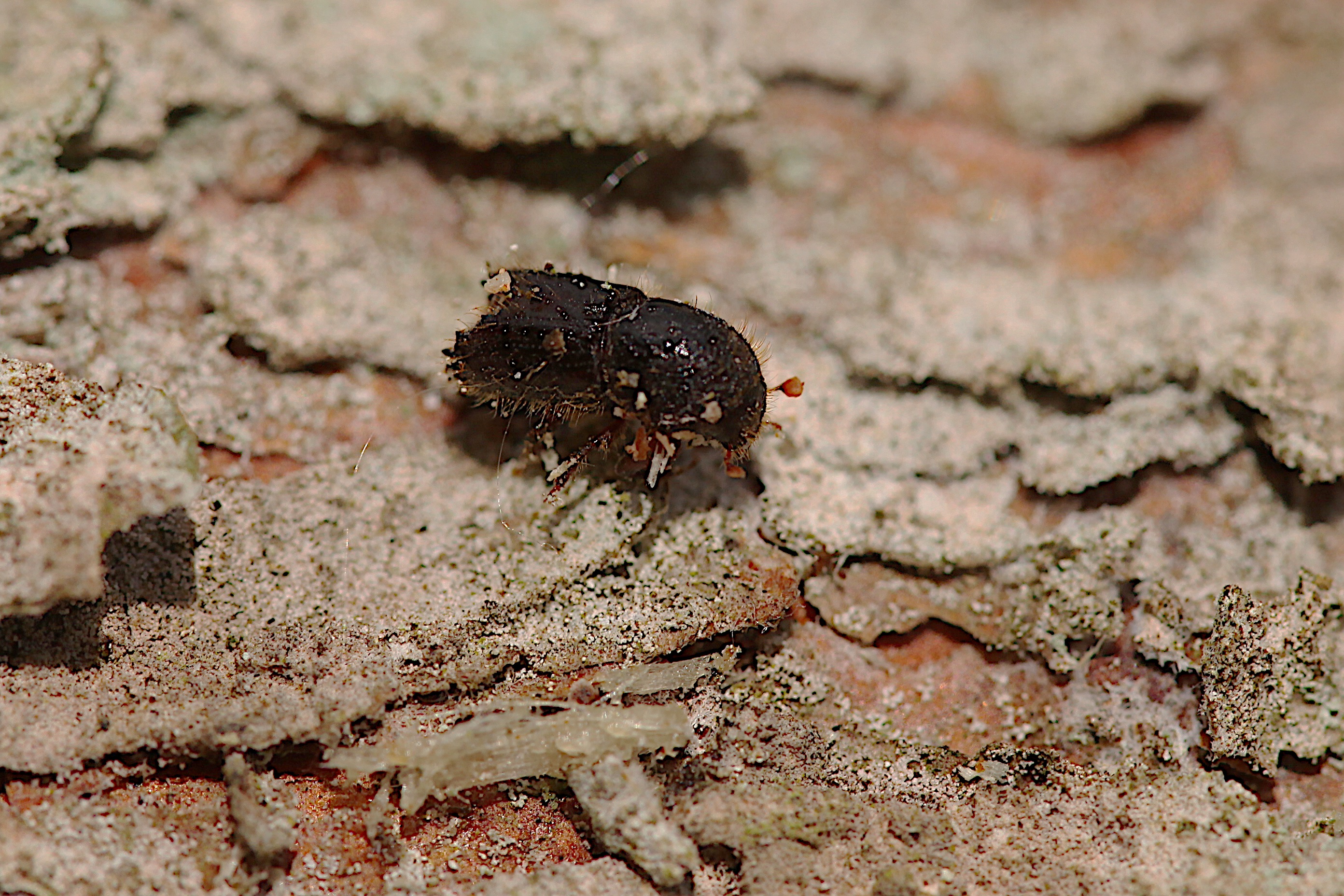
Ips typographus (the eight toothed spruce bark beetle), is native to a wide region of the northern hemisphere from Japan to western Europe. Usually only attacking stressed trees, sometimes populations of the beetle can build to epidemic levels, attacking large areas of healthy spruce trees.
With around 77% of the Sitka spruce and 42% of the Norway spruce in GB growing in Scotland it is understandable that forest managers are wary of the potential impacts of this beetle.
In 2018 Ips typographus was found breeding in woodland in south east England which was subsequently eradicated. Since 2020 further outbreaks have been found and eradicated within the same region and in 2024, also sites in East Anglia.
In summer 2023, two interceptions of beetles were made in Scotland but no evidence of any breeding populations of Ips typographus have been found.
How damaging is this beetle?
Usually, Ips typographus attacks stressed, weakened or dying spruce. In England, all attacks were found on small numbers of these types of tree or snapped tree tops and recently-felled trees.
In low numbers, the beetle cannot survive on healthy spruce as the trees’ resinous defence overwhelms attacks, but if populations rise to very high levels, as has happened in recent years in parts of mainland Europe, then healthy trees can be overwhelmed by the sheer number of beetles attacking and significant landscape-scale damage can occur. A trigger for beetle populations building to damaging levels could be extended or repeated drought conditions or extensive storm damage.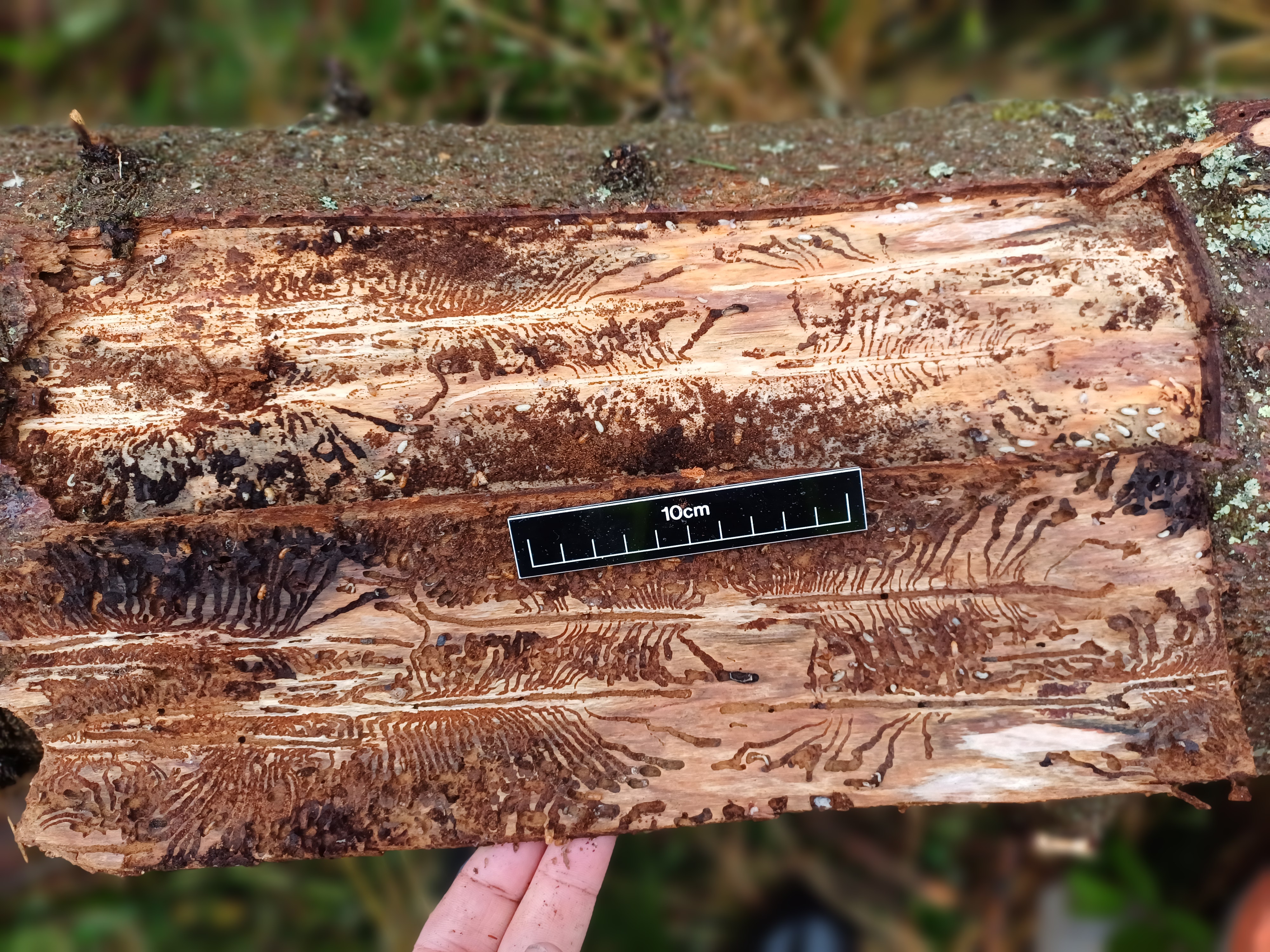
Why have these outbreaks been found?
For over twenty years before the first outbreak was found in 2018, a network of traps for Ips typographus had been in place across GB without any findings.
Scientists have since confirmed that the south-east English outbreak sites tie in with certain weather conditions carrying beetles across the English Channel from continental European forests suffering recent massive outbreaks.
With beetles multiplying at these outbreaks in their billions, pressure for food led to beetles travelling longer distances and, in some instances, conducive weather blew some of them much further than the beetle could fly under its own power.
At some forests, where enough beetles were carried and suitable material was also available, they bred and successfully laid eggs, but at most locations, no suitable trees were present and they simply died. There is also evidence of beetles breeding for a single year, but then dying out due to lack of nearby suitable trees.
What news is there about the recent finding in Scotland?
In Summer 2023, two interceptions of Ips typographus were made at traps located in woods near to the port at Grangemouth. Extensive aerial and ground surveillance was undertaken in the region of those findings during the autumn and winter 2023/24.
Although evidence of Dendroctonus micans (the great spruce bark beetle) were found in the two woods where the trap findings were made, no trees with Ips typographus activity were found at any site investigated.
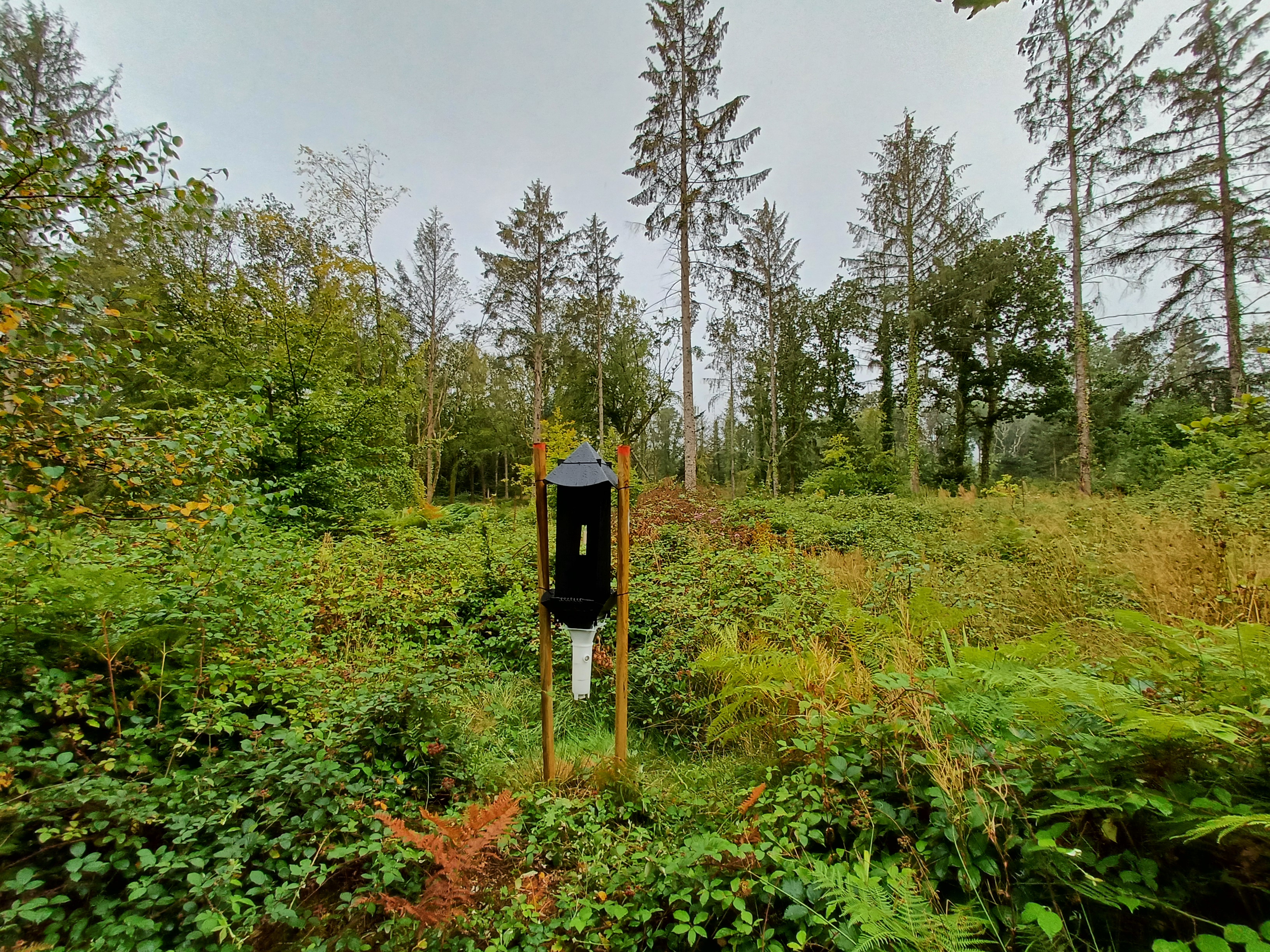
In spring 2024, further to on-site surveillance, an additional network of pheromone traps were installed in and around those woods and have been monitored throughout the year.
Apart from providing enhanced surveillance capabilities by trapping potential arrivals, pheromone traps are also used in response to outbreaks in England for “mopping-up” emerging beetles that have overwintered in trees, soil or litter on site.
Did the beetles fly to Scotland?
Insect traps using a pheromone that specifically attracts Ips typographus have been established in a broad network across Great Britain, collected fortnightly throughout the beetle’s active period. Currently, all evidence points to weather conditions only carrying beetles from mainland Europe to sites within the Demarcated Area in south-east England, the greatest cumulative numbers trapped in the counties closest to the continent.
There is a long history of very low numbers of Ips typographus being trapped at ports around GB, hitch-hiking on imported timber. Forestry Commission undertakes statutory inspections at ports and processors on behalf of Scottish Forestry and is continually investigating commodities potentially of risk.
I heard the beetle was found attacking Sitka spruce – should I be worried?
In summer 2024 it was announced that Ips typographus was found successfully breeding in Sitka spruce at a site in England. It is not the first time it has been found affecting Sitka spruce – stands next to heavily infested Norway spruce in France and Denmark have previously been observed.
Bearing in mind that the beetle lives on many spruce species across its natural range from Japan to Europe, it is not particularly surprising that it can survive on a North American spruce.
Only a small number of Sitka spruce were affected at the outbreak in England and they were highly-stressed or recently-felled trees. Entomologists from Forest Research are collaborating in further research of the potential threats to Sitka spruce.
Is there anything forest managers can do?
Absolutely! A clear message we can take from ongoing outbreak eradication in England is that low populations of Ips typographus cannot successfully attack healthy spruce.
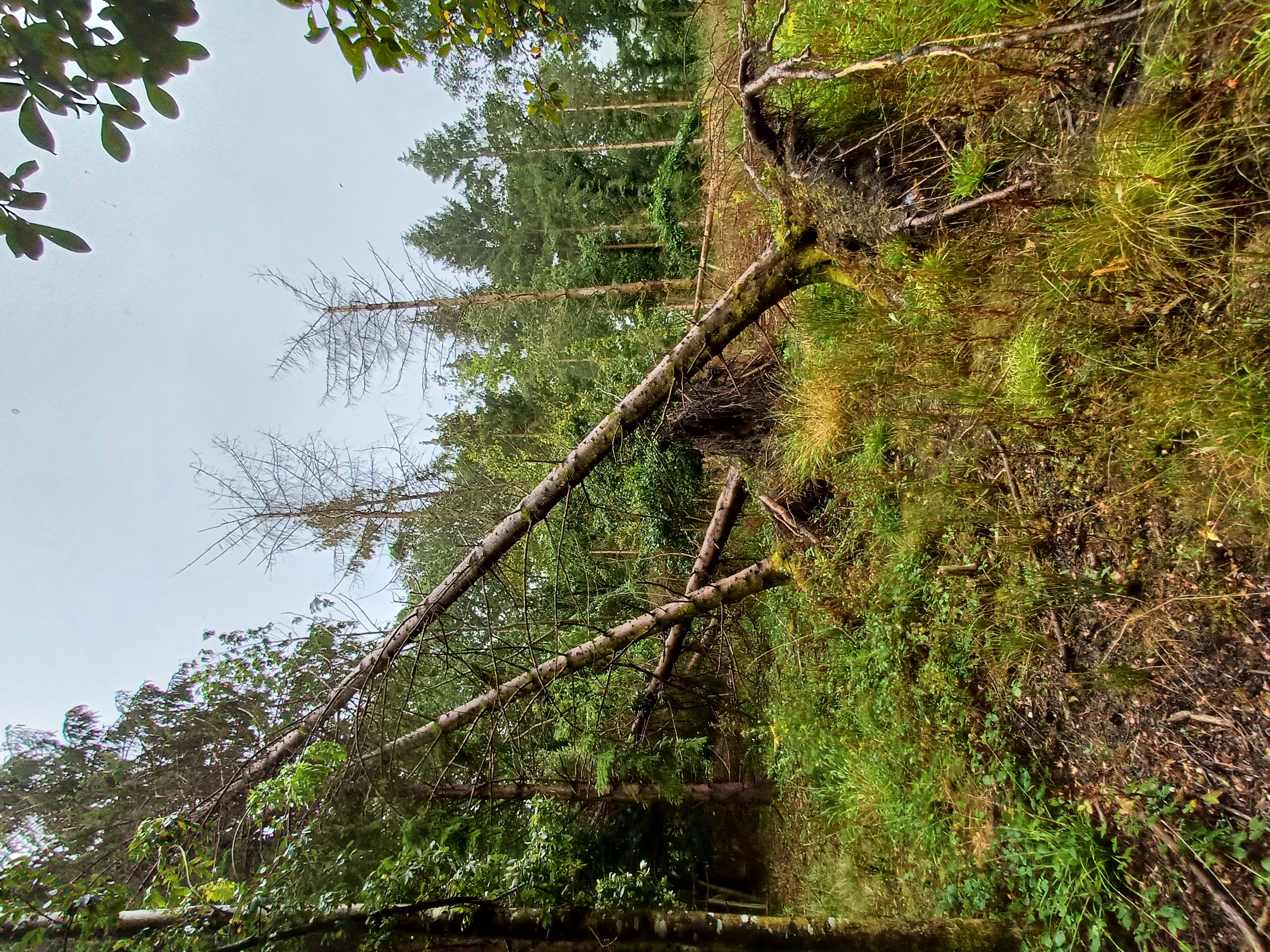
Stressed trees and recently-snapped tops are ideal for the beetle to thrive on – prompt management of these will remove any potential breeding material and an outbreak will not occur.
In the mid-term, consider if planned forest operations might cause trees to become susceptible – a good example was at a 2024 outbreak site in England that received an extremely heavy thin a few years ago. This resulted in high levels of wind-snapped tops, windthrow and a generally-stressed crop that arriving wind-blown beetles were readily able to take advantage of.
Longer-term, spruce owners could take stock of any spruce growing on sites of marginal suitability that are at risk of increasing impacts from climate change and consider accelerating alternative options. The Ecological Site Classification tool may help when assessing whether a planting site will be suitable for a tree species for the entire duration of the crop:
Finally, if you see any suspicious symptoms, please take several photos (a finger in shot for close-ups is useful for scale) and promptly report using TreeAlert.